medical tourism india
expert doctors and high end medical facilities
Get the most affordable medical care in the world without
sacrificing quality
make an appointment

follow us on


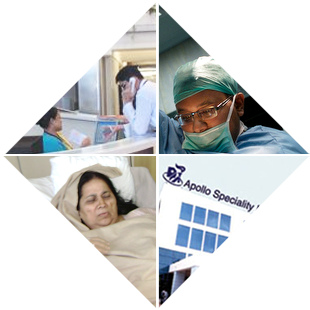
Mastectomy
Mastectomy is surgery to remove all breast tissue from a
breast in order to treat or prevent breast cancer. Many women
with early-stage breast cancer can choose breast-conserving
surgery (lumpectomy), in which only the tumor is removed from
the breast. Deciding between mastectomy and lumpectomy can be
difficult. Both procedures are equally effective. But
lumpectomy isn't an option for some women with breast cancer,
and others prefer to undergo a mastectomy.
Advance mastectomy techniques can preserve breast skin and
give appearance of more natural breast following the
procedure. Surgery to restore shape of your breast — called
breast reconstruction — may be done at the same time as your
mastectomy or in a secondary operation at a later date.
Why it's done
The goal of mastectomy is to remove all breast tissue if you
have breast cancer or are at especially high risk of
developing it. You may have a mastectomy in one or both
breasts.
Physically removing the tumor is the single most effective
treatment for breast cancer. Removal and examination of breast
tissue and nearby lymph nodes also provides important
information to help guide future treatment decisions.
Mastectomy may be a treatment option for many types of breast
cancer, including:
- Ductal carcinoma in situ (DCIS).
- Stages 1 and 2 (early-stage) breast cancer
- Stage 3 (locally advanced) breast cancer
- Inflammatory breast cancer (after therapy to reduce skin swelling and inflammation)
- Paget's disease of the breast
- Locally recurrent breast cancer
- Phyllodes tumor
Your doctor may recommend mastectomy instead of lumpectomy plus radiation if:
- You have two or more tumors in several areas of the breast.
- You have widespread or malignant-appearing calcium deposits (micro calcifications) throughout the breast.
- You've previously had radiation treatment to the breast region.
- You're pregnant, when radiation creates an unacceptable risk to your unborn child.
- You've had lumpectomy, but cancer is still present.
- You carry a gene mutation that gives you a high risk of developing a second cancer in your breast.
- Quick Links
-
Find your Hospitals

-
Latest News
- @Rotography Please kindly use Support Forum: Medical.co.uk
- @Rotography Please kindly use Support Forum: Medical.co.uk
- @Rotography Please kindly use Support Forum: Medical.co.uk
-
Get in Touch with us
-
Address : (JAC UNITED )
Vishnu Commercial Bldg, A Wing, Office No. 402,
Sec 15, C.B.D. Belapur, Navi Mumbai.
E-mail: info@asiamedcare.com
-
Address : (JAC UNITED )
© copyright 2023. all rights reserved by asiamedcare
Design & Developed:
WEI